
Training your dog isn’t just about teaching them to sit or stay; it’s about building a strong bond and ensuring they fit well into your family and community. Mastering dog obedience training can make outings with your furry friend more enjoyable. Whether you’re tackling basic commands or diving into advanced techniques, understanding the ins and outs of effective training is key. This guide will walk you through the essential tips and insights to help you succeed in training your dog.
Key Takeaways
- Start training your dog early to build good habits.
- Use positive reinforcement to encourage desired behaviors.
- Choose a training program that suits your dog’s specific needs.
- Consistency is crucial in maintaining training progress.
- Consider group classes for socialization benefits.
Understanding the Basics of Dog Obedience Training
The Importance of Early Training
Starting obedience training early is like giving your dog a head start in life. Puppies are more adaptable and eager to learn, making it the ideal time to introduce basic commands. Early training helps prevent the development of bad habits and fosters a strong bond between you and your furry friend. Plus, a well-trained dog is safer and more enjoyable to be around, whether you’re at home or out in public.
Key Commands Every Dog Should Know
There are a few fundamental commands that every dog should master to ensure they are well-behaved and manageable in different situations. Here’s a quick list:
- Sit – A basic but essential command that helps control your dog in various settings.
- Stay – Useful for keeping your dog in place, especially in potentially dangerous situations.
- Come – Vital for recall, ensuring your dog returns to you when called.
Mastering these commands lays the groundwork for more advanced training and helps your dog understand their role in the family.
Positive Reinforcement Techniques
Positive reinforcement is all about rewarding good behavior to encourage your dog to repeat it. This method is not only effective but also strengthens the bond between you and your dog. Use treats, praise, or playtime as rewards to motivate your dog. Remember, consistency is key. Reinforcing commands consistently will help your dog learn faster and respond better. For more on effective training techniques, consider exploring The Quadrant which delves into positive reinforcement and other methods.
Choosing the Right Training Program
Evaluating Training Methods
Picking the right dog training program is like choosing the right school for your kid. You want the best fit. In Orlando, there’s a bunch of options, from traditional obedience classes to modern techniques like clicker training. Positive reinforcement is a big deal these days, focusing on rewarding good behavior instead of punishing bad. When you’re looking at different programs, see if they emphasize this. It’s a more humane and effective way to train.
Considering Your Dog’s Needs
Every dog is different. Some might need just the basics, while others have specific issues like aggression or anxiety. Think about what your pup really needs. Is it basic commands or something more specialized, like therapy dog training? Understanding your dog’s unique personality and needs will help you pick a program that works best for them.
Finding Qualified Trainers
Not all trainers are created equal. You want someone experienced, someone who knows their stuff. Look for trainers with certifications or recommendations. In Orlando, there are trainers who offer in-home dog training services, which can be super convenient. A good trainer will tailor their approach to fit your dog’s personality and your lifestyle.
“Choosing the right training program is about finding the balance between your dog’s needs and the trainer’s expertise. It’s not one-size-fits-all.”
Overcoming Common Behavioral Challenges
Addressing Separation Anxiety
Separation anxiety can really tug at your heartstrings. Dogs with this issue often become distressed when left alone. Creating a consistent routine can significantly help in calming their nerves. Gradually increasing the time your dog spends alone, coupled with positive reinforcement, can ease their anxiety over time. A well-structured routine not only helps your dog feel secure but also lets them know what to expect, reducing stress.
Managing Aggression and Reactiveness
Dealing with aggression in dogs can be tricky, but with patience, you can manage it effectively. Start by identifying triggers that cause your dog’s aggressive behavior. From there, work on desensitizing your dog to these triggers in a controlled environment. Consistency in training and maintaining a calm demeanor can influence your dog’s emotional state positively. It’s crucial to remember that aggression often stems from fear or insecurity, so addressing these root causes is essential.
Dealing with Excessive Barking
Excessive barking can be a nuisance, but understanding why your dog barks is the first step in managing it. Dogs bark for various reasons, from boredom to alerting you of something unusual. To curb this behavior, ensure your dog gets plenty of physical and mental stimulation. Teaching the “quiet” command and rewarding your dog when they stop barking can also be effective. Sometimes, a simple change in routine or environment can make a huge difference.
Advanced Training Techniques for Experienced Owners
Off-Leash Control and Recall
Getting your dog to respond when they’re off-leash is a big deal. It’s about freedom for them and peace of mind for you. Start in a safe, enclosed area to practice. Use a long lead to give them space but still have control. Consistency is key. Always reward them when they come back to you. Treats, toys, or just a lot of praise can work wonders. Over time, gradually increase the distance and distractions. The goal is to have your dog return to you no matter what’s going on around them.
Incorporating Agility Training
Agility training isn’t just for competitions; it’s a fun way to keep your dog fit and sharp. Set up a simple course in your backyard using cones, tunnels, or even household items. Start with basic commands like “jump” or “go through”. Agility builds your dog’s confidence and strengthens your bond. Plus, it’s a great way to burn off energy. As you both get more comfortable, introduce more complex obstacles and increase the speed. Remember, it’s all about teamwork.
Preparing for Therapy Dog Certification
Therapy dogs bring comfort and joy to people in hospitals, schools, and more. If you’re thinking about this path, your dog needs to be calm, friendly, and well-behaved in different environments. Begin by taking them to busy places to get them used to various sights and sounds. Work on commands like “leave it” and “settle” to manage their behavior around distractions. Many organizations offer specific training and tests for certification. It’s a rewarding experience that lets you share your dog’s love with those who need it most.
Advanced training isn’t just about teaching new tricks; it’s about deepening the connection with your dog. Whether it’s mastering off-leash recall or preparing for therapy work, the journey is as rewarding as the destination.
For more insights on how training a dog is a rewarding journey, consider exploring different training options and experiences.
Integrating Training into Daily Life
Consistency in Commands and Routines
Training a dog isn’t just a one-time event; it’s a lifestyle. Consistency is key when it comes to reinforcing commands and routines. Every family member should use the same commands for each action. If you say “sit,” everyone should use “sit”—not “sit down” or “take a seat.” This uniformity helps your dog understand what is expected, reducing confusion.
A routine can be a lifesaver. Dogs thrive on predictability, so try to feed, walk, and train them around the same times each day. This not only helps with obedience but also makes your dog feel secure and more relaxed.
Involving Family Members in Training
Getting everyone involved in your dog’s training can be a game-changer. It’s not just about teaching your dog commands; it’s about building a bond. Make it a family affair by assigning small tasks to each member, like feeding or walking. This shared responsibility ensures that everyone is on the same page and your dog receives consistent signals.
You can even turn it into a fun family activity. Create a “training chart” where each person can mark off when they’ve practiced a command or routine. This not only keeps everyone accountable but also makes training a part of your daily life.
Maintaining Progress with Regular Practice
Once your dog has learned the basics, it’s important to keep practicing to maintain their skills. Regular short sessions are more effective than infrequent long ones. You might want to set aside just 5-10 minutes a day for focused training.
Remember, training doesn’t have to be a formal session. Integrate it into everyday activities. Ask your dog to “sit” before meals, “stay” while you open the door, or “come” during a walk. This keeps their skills sharp and makes obedience a natural part of their life.
Training is a journey, not a destination. By weaving it into your daily life, you not only improve your dog’s behavior but also strengthen your bond with them. For more tips on strengthening this bond, check out this comprehensive guide.
Exploring Group Classes and Socialization Opportunities
Benefits of Group Training Sessions
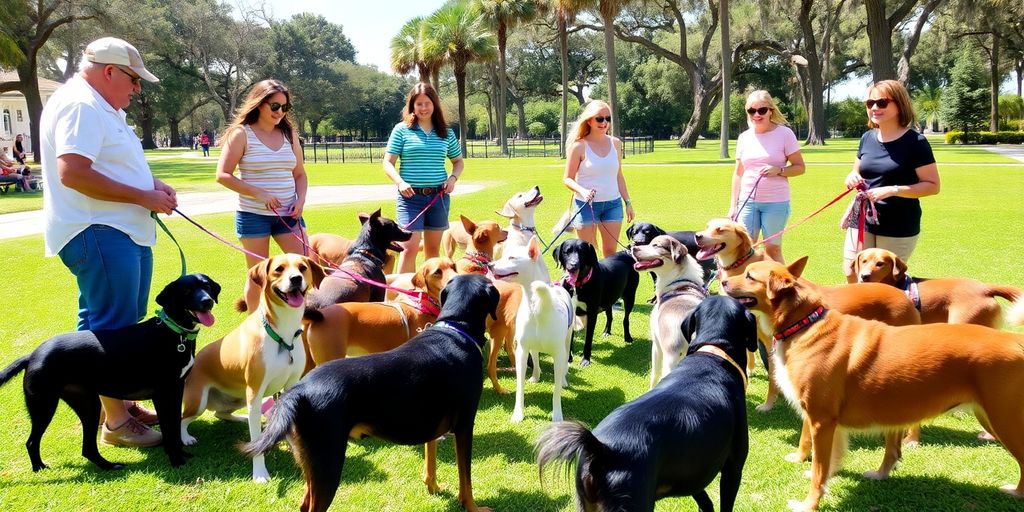
Group training sessions can be a game-changer for both you and your dog. These classes offer a structured environment where dogs can learn alongside their peers. Socialization is key during these sessions, as dogs get to interact with others, which is crucial for their development. Plus, it’s a great way for owners to pick up new tips and tricks from professional trainers and fellow dog lovers. Classes are often small, ensuring personalized attention, and they come with flexible schedules, so you can find a time that works for you.
Socialization for Puppies and Adult Dogs
Whether you have a bouncy puppy or a more mature dog, socialization is essential. Puppies, especially, benefit from early exposure to different sights, sounds, and smells. At classes like TeachDog.com, they learn to play nicely with others and get accustomed to various environments. For adult dogs, socialization helps reduce anxiety and improve behavior around other dogs and humans. It’s never too late to start!
Choosing the Right Class for Your Dog
Picking the right class can make all the difference. Consider your dog’s personality and needs. Some dogs thrive in a lively environment, while others might need a quieter setting. Look for classes that match your dog’s skill level and goals. Many places offer “levels training,” where you can graduate to more advanced classes as your dog masters new skills. This ensures that your dog is always challenged and learning new things. Remember, every dog is different, so what works for one might not work for another.
Utilizing In-Home and Remote Training Options
Advantages of In-Home Training
In-home training offers a personalized touch that can make a big difference for your dog. Having a trainer come to your home means the lessons happen right where your dog is most comfortable. This can help address specific behaviors that only show up at home, like barking at the doorbell or being too protective of their space. Plus, you get to be involved in every step, learning alongside your pup. Here’s why you might consider it:
- Your dog feels more relaxed in its own environment.
- You can focus on particular issues that occur at home.
- It’s perfect for dogs that get anxious in new places.
When to Consider Remote Training
Remote training is a great option if you’re juggling a lot or if getting to a class just isn’t feasible. You can connect with trainers virtually and still get the guidance you need. This can be super handy for:
- Families with hectic schedules.
- Owners who travel a lot but want to keep up with training.
- Dogs that have issues best addressed in their home setting.
With remote training, you can bring the expertise of a professional into your living room without the hassle of travel.
Customizing Training to Fit Your Schedule
Life gets busy, and training sometimes takes a backseat. But with flexible options like in-home and remote training, you can tailor the sessions to fit your calendar. Whether it’s an early morning session before work or a late evening one after the kids are in bed, you have the power to decide when training happens. Here’s how you can make it work:
- Set a consistent schedule that fits your lifestyle.
- Communicate your needs clearly with your trainer.
- Be open to adjusting as you go, based on what works best for you and your dog.
And if you’re in the Winter Park area, consider checking out the indoor dog training gym for small group classes that might complement your home training efforts.
If you’re looking to train your dog effectively, consider both in-home and remote training options. These methods can fit your schedule and help your dog learn in a comfortable environment. Visit our website to explore the best dog training courses available!
Wrapping It Up
Training your dog in Orlando can be a rewarding journey for both you and your furry friend. With the right approach and a bit of patience, you can teach your dog to be well-behaved and happy. Remember, every dog is different, so what works for one might not work for another. Keep trying different methods until you find the one that clicks. And don’t forget to enjoy the process—after all, it’s about building a stronger bond with your pet. Whether you’re tackling basic obedience or more advanced tricks, the key is consistency and love. So, grab those treats, keep your spirits high, and happy training!
Frequently Asked Questions
What age should I start training my puppy?
It’s best to start training your puppy as early as 8 weeks old. Early training helps them learn basic commands and social skills.
How do I choose a dog trainer?
Look for trainers with good reviews, experience, and methods that match your dog’s needs. It’s important they use positive reinforcement techniques.
What if my dog has separation anxiety?
Try gradually getting your dog used to being alone by leaving them for short periods and slowly increasing the time. You can also consult a trainer for more help.
Can older dogs learn new tricks?
Yes, older dogs can learn new tricks! It may take a little more time and patience, but with the right approach, they can learn just as well as younger dogs.
Is group training better than private lessons?
It depends on your dog’s personality and needs. Group training is great for socialization, while private lessons can focus more on specific issues.
What are the benefits of remote dog training?
Remote training offers flexibility and convenience, allowing you to train your dog at home with guidance from a professional through video sessions.