
Learning how to train a dog with a physical disability is a big step, but totally doable with the right approach. It’s not just about teaching tricks; it’s about building a solid working relationship where your dog can really help you out. We’ll go over everything from basic manners to handling real-world situations, making sure your furry helper is ready for anything.
Key Takeaways
- Start with the basics: Make sure your dog knows core obedience commands really well before moving on to more complex stuff.
- Break down tasks: For service tasks, split them into small, easy steps. This makes learning less confusing for your dog.
- Practice everywhere: Get your dog used to different public places slowly. Start easy and then add more challenges.
- Test in real life: Practice tasks when things aren’t perfect, like when you’re tired or there are distractions.
- Keep practicing: Training isn’t a one-time thing. Keep working on skills regularly so your dog stays sharp and ready to help.
Mastering Foundation Skills for Your Disabled Dog
Obedience isn’t just a nice extra; it’s the absolute bedrock for everything else your dog will learn. A service dog has to respond to commands right away, no matter what’s going on around them. This is super important, especially if things get a bit dicey. You’ve got to be able to control your dog at all times, so getting them to listen is not something you can skip.
Start training in a quiet spot where there aren’t a lot of distractions. Then, slowly add more challenges. Your dog needs to really get these basic commands down pat:
Building Core Obedience
Building core obedience for a dog with a physical disability means adapting how you teach. It’s about making sure your dog can perform basic commands comfortably and reliably, even with their physical limitations. For example, a dog with joint issues might find a traditional ‘down’ difficult. You might need to teach a modified ‘down’ where they only go halfway, or perhaps a ‘settle’ command that means lying down in a comfortable position. The goal is to get the same reliable response, just in a way that works for their body. Think about how they move and what’s easiest for them. You might use a ramp instead of stairs for certain exercises, or a soft mat for ‘stays’. It’s all about patience and finding what clicks for your individual dog. Remember, every dog is different, and their physical needs will shape how you approach these early lessons. You can even teach them to roll over in a way that is comfortable for them.
Developing Reliable Command Response
Getting your dog to respond reliably to commands means practicing in all sorts of situations. It’s not enough for them to ‘sit’ in your living room; they need to ‘sit’ at the park, at the vet, or when a squirrel runs by. For a disabled dog, this might mean starting with very short training sessions and gradually increasing the duration and distractions. If your dog has hearing issues, you might rely more on hand signals. If they have vision problems, verbal cues become even more important. The key is consistency. Always use the same command for the same action, and reward them immediately when they get it right. This builds a strong connection between the command and the action in their mind. You want their response to be almost automatic, a true reflex, no matter what’s happening around them.
When working with a disabled dog, it’s extra important to celebrate every small success. They might take longer to learn certain things, or need more repetitions. Your encouragement and positive reinforcement are vital for their confidence and willingness to keep trying. Make training a fun and rewarding experience for both of you.
Practicing Self-Control and Manners
Self-control and good manners are super important for any dog, but especially for a service dog. This means teaching them things like not jumping on people, waiting patiently for their food, or staying calm when exciting things happen. For a disabled dog, this might involve teaching them to settle quietly in their bed while you’re busy, or to walk nicely on a leash without pulling, even if they have mobility aids. Impulse control exercises, like ‘leave it’ with a tempting treat, are great for building this skill. You’re teaching them to think before they act, which is a huge part of being a well-behaved and reliable service dog. It’s about teaching them to manage their impulses and behave appropriately in different social settings.
Service Task Training for Dogs with Disabilities
Service dogs are more than just pets; they do specific jobs that help people with disabilities. It’s not about just having a well-behaved dog, but one that performs actions to help manage a condition. This part of training is where your dog learns to do those special tasks.
Identifying Essential Disability-Specific Tasks
Before you even start training, you need to figure out what tasks your dog will actually do. This isn’t just some random list of tricks. These tasks have to directly help with your disability. Think about what daily challenges you face because of your disability. Does your dog need to pick things up? Open doors? Alert you to something? Knowing the exact tasks is super important because it guides all your training efforts. If you don’t pick the right tasks, you could spend a lot of time teaching your dog things that don’t really count as service dog work, or things your dog can’t even do reliably because of their own physical limits. When someone asks what your dog does to help with your disability, you need a clear answer. For example, a dog might be trained to retrieve dropped items, or to provide deep pressure therapy during an anxiety attack.
Breaking Down Complex Behaviors
Teaching a service dog a complex task is kind of like building something big – you don’t just start with the roof. Most helpful tasks are made up of a bunch of smaller steps that dogs wouldn’t naturally do. Trying to teach a whole task, like "get my medicine" or "tell me my blood sugar is low," all at once usually just makes everyone confused and frustrated. Instead, you break each task down into tiny, manageable pieces. Each piece builds on the last one. For example, if you’re teaching your dog to retrieve something, the steps might look like this:
- Recognizing the item by its name or smell.
- Picking it up gently without messing it up.
- Holding it securely without dropping it or chewing on it.
- Bringing it back to you.
- Letting go of it gently into your hand.
Make sure your dog completely masters each small step before you try to put them all together. This way, training is clearer for your dog, and if there’s a problem, you can fix that one specific step instead of having to start over from the beginning.
It’s easy to get ahead of yourself when you see your dog doing well, but patience is key. Rushing through the steps can lead to gaps in their understanding, making the whole task less reliable in the long run. Take your time, celebrate the small wins, and build a solid foundation for each behavior.
Refining Tasks for Real-World Reliability
There’s a big difference between your dog doing a task perfectly in a quiet training session and doing it when you’re actually having symptoms and really need their help. Task refinement is all about closing that gap. In the beginning, you’re probably training in a calm place with lots of guidance. But real-life disability support happens in all sorts of unpredictable places, and you might not be able to give perfect cues or help your dog succeed. You need to build reliability. Here’s how:
- Duration: Slowly make your dog perform the task for longer periods. If they need to hold a retrieve, start with a few seconds and work up to a minute or more.
- Distance: Increase how far away you are from your dog while they’re doing the task. Can they still pick up that item from across the room?
- Distraction: Introduce distractions gradually. Start with mild ones, like a toy on the floor, and work up to more challenging ones, like other people or noises. Your dog needs to stay focused on their job no matter what’s going on around them.
Public Access Training for Disabled Dogs
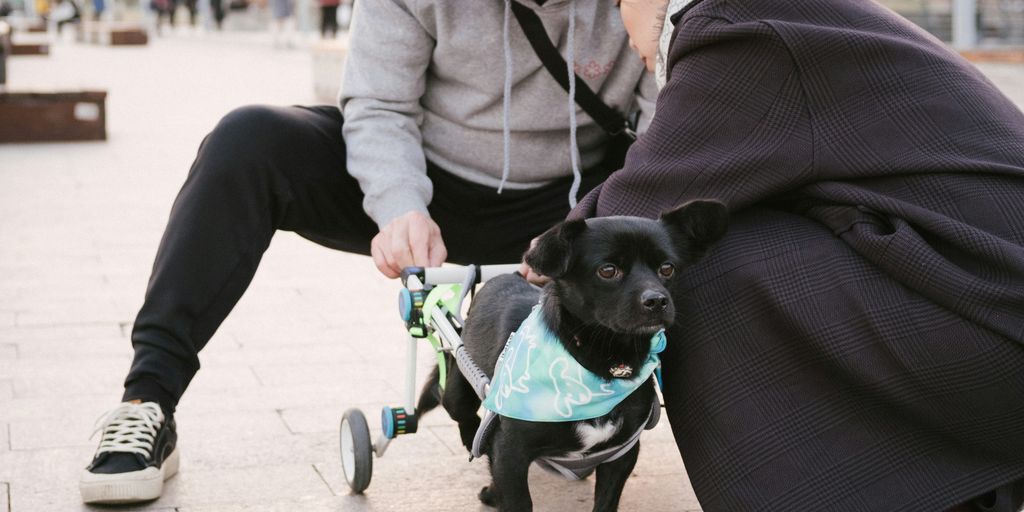
Public access training for a disabled dog is all about taking things slow and steady. You wouldn’t throw someone who’s just learning to swim into the deep end, right? Same idea here. If you rush it, your dog might get scared, and that fear can be really tough to get rid of later. Building up exposure step by step helps your dog learn to handle new things with confidence. It’s like building a ladder; every step needs to be solid before you move to the next one. This careful way of doing things also helps you figure out what might bother your dog early on, like automatic doors or kids, when it’s easier to fix. For more detailed guidance on training your dog, check out the TeachDog.com guides.
Gradual Exposure to Public Environments
When you’re getting your dog ready for public places, think about starting small and working your way up. It’s not a race, and every dog learns at their own speed. The goal is for them to feel good and safe, not overwhelmed.
- Begin in really quiet spots, like an empty park early in the morning or a sidewalk that doesn’t get much foot traffic. Just practice simple commands there with hardly any distractions.
- Next, try places that are pet-friendly but not too busy. Think about a hardware store during off-peak hours. They have different floor textures and some activity, but it’s usually not crazy.
- Once your dog is comfortable with that, move to slightly busier spots. Maybe an outdoor shopping area or a restaurant with outdoor seating. The key is still to keep it manageable.
- Finally, when they’re ready, you can try really busy places like grocery stores or malls. These spots have a lot going on—lots of smells, sounds, and people—so you want to make sure your dog is super confident before tackling them.
Navigating Diverse Public Settings
Getting your dog used to different public places means more than just being there; it means they need to act right. A dog that barks a lot, has accidents inside, runs up to strangers, or just can’t settle down can actually lose their right to be in public, even if they’re amazing at their service tasks. It’s not just about what they do for you, but how they behave.
- Quiet Settling: Your dog should be able to lie down calmly under a table or next to a chair for at least 30 minutes without getting restless. Start this at home during meals, then try outdoor cafes, and eventually move to indoor restaurants.
- Ignoring Distractions: They need to be able to focus on you and their job, even when there are other dogs, loud noises, or interesting smells around. This takes a lot of practice in different environments.
- Polite Greetings: Your dog should not approach strangers or other animals unless you give them permission. They need to understand that their job is to be with you and not interact with everyone else.
It’s super important to remember the "three-visit rule" for each new place you introduce. The first visit is just about getting comfortable and checking things out. The second is for doing some basic work, like a few commands. The third is when you can really start doing more serious training. Don’t rush it. It’s way better to take an extra month in training than to create a fear that might stick around forever.
Handling Specific Public Challenges
Public places throw all sorts of curveballs at you and your dog. It’s not just about crowds; it’s about unexpected noises, strange surfaces, and people who might not understand service dog etiquette. Being prepared for these specific challenges makes a huge difference.
- Unexpected Noises: A sudden loud bang, a fire alarm, or a child screaming can be startling. Practice desensitizing your dog to various sounds at home, then gradually introduce them in public. Reward calm reactions.
- Different Surfaces: Your dog might encounter slippery floors, grates, escalators, or stairs. Practice walking on these surfaces in a controlled environment first. Make sure they are comfortable and confident on all types of ground.
- Public Interactions: People will want to pet your dog or talk to you. Your dog needs to learn to ignore these distractions and stay focused on you. You’ll also need to practice politely explaining that your dog is working and shouldn’t be disturbed.
Practicing Reliability for Disabled Dogs
Think about it this way: your dog might be great at doing things around the house, but that’s like practicing basketball in an empty gym. The real game has screaming fans, other players, and lots of pressure. It’s the same for your service dog. Your dog needs to learn how to help you while dealing with all the distractions of the real world. This means making sure they can perform their tasks no matter what’s going on around them. It’s about building consistency.
Simulating Real-World Scenarios
To make sure your dog is truly reliable, you have to practice in situations that are as close to real life as possible. This means gradually adding in distractions and varying the environments. Start small, then build up. For example, if your dog needs to retrieve an item, practice it first in a quiet room, then with the TV on, then with a friend talking nearby. The goal is for them to perform perfectly even when things aren’t perfect around them. It’s about making sure your dog can do their job when it really counts.
- Practice in different locations: your home, a friend’s house, a quiet park, a busy store.
- Introduce various sounds: traffic, music, other people talking, children playing.
- Incorporate different people: family members, friends, strangers.
- Vary the time of day: morning, afternoon, evening, when it’s light, when it’s dark.
Testing Endurance and Focus
It’s not just about doing a task once; it’s about doing it for as long as you might need it. Your dog needs to be able to maintain their focus and perform tasks for extended periods. This is especially true for tasks that require sustained effort, like providing deep pressure therapy or staying by your side for a long time in a public place. You want to make sure they don’t get tired too quickly or lose interest. Service dog training involves building up this stamina over time.
It’s important to remember that building endurance isn’t about pushing your dog to their breaking point. It’s about gradually increasing the duration and intensity of their work so they can comfortably handle the demands of your daily life. Always end on a good note, with success and praise.
Ensuring Performance During Symptom Flare-Ups
This is probably the most important part of reliability training. Your dog needs to be able to help you even when you’re not feeling your best. This means practicing when you might be experiencing mild symptoms of your disability, not just when you’re feeling great. It’s a delicate balance, because you don’t want to put yourself or your dog in danger, but they need to learn to respond when you’re not able to give perfect cues. This might involve:
- Practicing tasks when you’re a bit fatigued.
- Having them respond to cues that might be less clear than usual.
- Working on tasks when you’re distracted by your symptoms.
- Simulating scenarios where you might need immediate assistance.
Keeping Skills Sharp with Ongoing Maintenance for Disabled Dogs
Think of your dog’s training like a musical instrument; even professional musicians practice daily. Without regular practice, your dog’s skills will get rusty and deteriorate, especially tasks they don’t use every day. For example, a dog trained to respond to seizures might go months between actual episodes, or a dog trained to retrieve emergency medication might rarely need to use that specific skill. But when these emergency skills are needed, they must work perfectly the first time. Regular practice keeps all your dog’s skills sharp and ready for action. It’s not about teaching them anything new; it’s about making sure they remember everything they’ve already learned.
Regular Practice and Evaluation
Keeping your dog’s skills fresh doesn’t have to be a huge chore. It’s more about consistency than long, intense sessions. A little bit of practice every day goes a long way. You can weave it into your daily routine without even thinking about it. For instance, ask for a "sit" before meals, practice "heel" during walks, or work on "stay" while you’re making coffee. These small moments add up.
- Every day (5-10 minutes): Practice basic commands during normal activities.
- Every week: Run through all of your dog’s special tasks, especially ones they don’t use often. If your dog is trained to press emergency buttons or retrieve specific items, practice these skills even if you haven’t needed them lately.
- Every month: Take your dog to a challenging environment they don’t visit often—maybe a busy store, public event, or restaurant—to keep their public behavior skills polished.
- Every three months: Do a complete check-up of all your dog’s skills. Test everything they know and look for any weak spots that need extra attention.
Many handlers find it helpful to use a simple calendar to track what skills to practice each day. This way, you don’t overwhelm yourself or your dog but still cover everything regularly. It’s about making it a natural part of your life together, not a separate, stressful event.
Adapting to Changing Needs
As your disability changes, your dog’s skills should evolve too. Many conditions change over time—mobility issues might worsen, symptoms might present differently, or new challenges might emerge. To keep your dog’s assistance relevant, you need to be flexible and ready to adjust their training. This means regularly checking in with yourself and your dog to see what’s working and what isn’t. Training dogs with mobility issues can be a continuous process of adjustment.
- Check-in with yourself: Every few months, consider whether your needs have changed. Are there new tasks that would help you? Are some tasks no longer as helpful?
- Build on what works: When teaching new skills, start with what your dog already knows. If your dog retrieves items well, they can learn to open drawers or refrigerators to get items. If they already alert you to sounds, they might learn to alert you to new sounds like medical devices.
- Gradual additions: Don’t try to teach several new skills at once. Add one new skill at a time while continuing to practice established tasks. This keeps things manageable for both of you.
Prioritizing Your Dog’s Well-being
Maintaining your dog’s skills isn’t just about practice; it’s also about making sure they are healthy and happy. A dog that isn’t feeling well won’t be able to perform their tasks reliably. Their physical and mental health directly impacts their ability to help you. Think about their diet, exercise, and mental stimulation. A balanced approach to their overall care is key.
- Diet and Exercise: Feed your dog a balanced diet and ensure they get regular exercise. A healthy body supports their ability to perform tasks effectively.
- Mental Stimulation: Mental stimulation is as important as physical exercise. Engage your dog in activities that challenge their mind, like puzzle toys or new tricks.
- Rest: Ensure your dog gets adequate rest. Fatigue can hinder their ability to assist effectively, just like it does for people.
- Hydration: Always provide access to clean water to keep your dog properly hydrated. This is a simple but often overlooked aspect of their well-being.
Keeping your disabled dog’s skills sharp is super important for their happiness and health. Regular care helps them stay active and enjoy life to the fullest. Want to learn more about how to keep your special friend thriving? Check out our website for amazing tips and resources!
Conclusion
Training a dog with a physical disability is a big deal, but it’s totally worth it. It takes time, patience, and a lot of effort. You’ll have good days and bad days, that’s just how it goes. But seeing your dog help you out, making your life a bit easier, it’s a great feeling. Remember, every little step forward is a win. Just keep at it, and you’ll build an amazing team with your dog.
Frequently Asked Questions
How often should I practice with my disabled dog to keep their skills sharp?
It’s super important to keep practicing with your dog. Just like people need to keep learning, dogs need to keep using their skills so they don’t forget them. This means doing their tasks and obedience training often.
Should I get a professional trainer to evaluate my dog’s skills regularly?
Yes, it’s a good idea to have a trainer check your dog’s skills every now and then. They can spot things you might miss and help make sure your dog is still doing everything correctly.
Can my dog’s training adapt if my disability changes over time?
Absolutely! As your needs change, your dog’s training should change too. If you need new help, your dog can learn new tasks. If something isn’t needed anymore, you can focus on other things.
What are some ways to ensure my dog’s overall well-being and health?
Making sure your dog is healthy is key. Give them good food, make sure they get enough exercise, and let them rest. A healthy dog is a happy and helpful dog.
How can I provide mental stimulation for my disabled dog?
Mental exercise is just as important as physical exercise. Play games that make your dog think, like puzzle toys or learning new tricks. This keeps their mind sharp.
Why is hydration important for a disabled dog, and how can I ensure they get enough water?
Always make sure your dog has fresh, clean water. Staying hydrated is super important for their health and energy, especially when they’re working hard.