
Teaching your dog to jump through hoops isn’t just a fun trick; it’s a doorway to a whole new world of bonding and exercise. You don’t need fancy gear or a backyard full of obstacles to start. Just grab a hoop, some treats, and a whole lot of patience. This guide will walk you through the steps, from the basics to more advanced techniques, ensuring both you and your furry friend have a blast while learning.
Key Takeaways
- Start with simple equipment like hoops and low jumps; it doesn’t have to be expensive to be effective.
- Clicker training is a powerful tool that can help you communicate better with your dog during agility training.
- Mastering basic commands like ‘sit’ and ‘stay’ is crucial before moving on to more complex agility tasks.
- Incorporate agility handling skills to improve your dog’s performance and build trust between you two.
- Keep training sessions fun and upbeat to maintain your dog’s motivation and make learning enjoyable.
Understanding the Basics of Dog Agility Training
The Importance of Early Training
Getting your dog started with agility training early on can be a game changer. Not only does it lay down the groundwork for a well-behaved pet, but it also sets the stage for a lifetime of fun and fitness. Puppies are like little sponges, absorbing everything around them. Starting agility training young helps them develop coordination, confidence, and a strong bond with their handler. It’s not just about jumping through hoops; it’s about building trust and understanding between you and your furry friend.
Early training doesn’t just teach your dog tricks; it fosters a sense of teamwork and mutual respect that lasts a lifetime.
Essential Equipment for Beginners
You don’t need to break the bank to get started with agility training. A few basic pieces of equipment will do the trick. Here’s a quick list to get you going:
- Jumps: Start with simple jumps that are adjustable in height.
- Tunnels: These are great for building confidence and speed.
- Weave Poles: Perfect for teaching your dog to navigate obstacles.
These items form the core of any agility course and can be easily set up in your backyard. As your dog progresses, you can add more complex equipment like teeter-totters and A-frames.
Creating a Safe Training Environment
Safety should always be your top priority when training your dog. Ensure that the training area is free of sharp objects and has a non-slip surface. Check that all equipment is sturdy and well-anchored. Also, keep an eye on the weather—training on a hot day can be tough on your dog. Always have water available, and take breaks to prevent overheating.
Incorporating agility training for dogs not only enhances their physical fitness but also strengthens the bond between you and your pet. By focusing on the right equipment and a safe environment, you ensure that training sessions are both productive and enjoyable.
Building a Strong Foundation with Clicker Training
The Science Behind Clicker Training
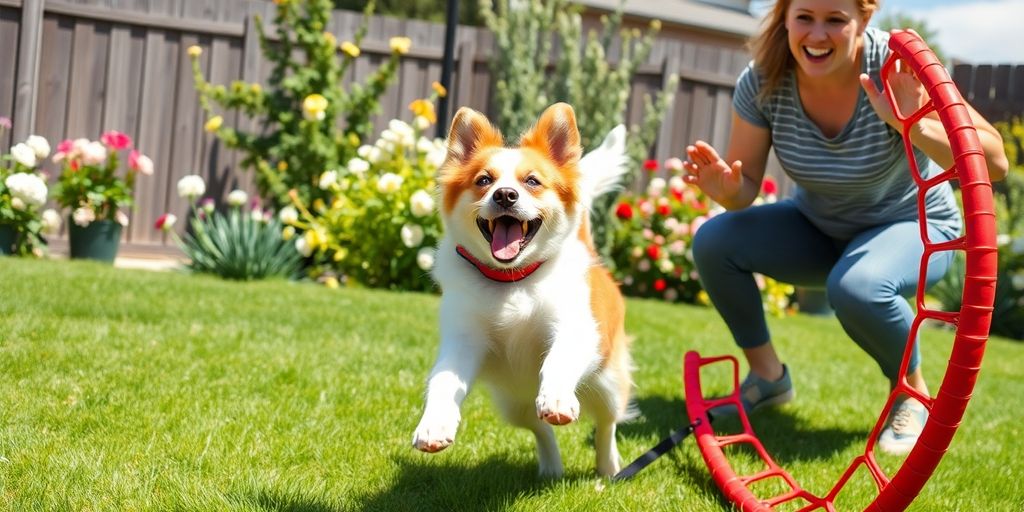
Clicker training is a method that uses a small device to make a distinct clicking sound. This sound acts as a marker to let your dog know exactly when they’ve done something right. It’s all about timing. The click tells your dog, "Yes, that was it!" and it’s followed by a reward. This technique is based on the principles of operant conditioning, which is a fancy way of saying that behaviors can be shaped by rewards. This method works because the click is a clear and consistent signal, making it easier for your dog to understand what behavior is being rewarded.
How to Use a Clicker Effectively
Using a clicker is pretty straightforward, but it does require some practice. Here’s a simple guide to get you started:
- Get the Right Tools: You need a clicker and some treats. Make sure the treats are small and tasty, so your dog is motivated.
- Introduce the Clicker: Start by clicking and then giving your dog a treat. Do this several times until your dog associates the click with a reward.
- Mark the Behavior: When your dog does something you like, click at the exact moment they perform the action, then give them a treat.
- Be Consistent: Always click for the correct behavior and follow with a treat. Consistency helps your dog learn faster.
- Fade the Clicker: Once your dog reliably performs the behavior, you can gradually stop using the clicker and rely on verbal cues and treats.
Common Mistakes to Avoid
While clicker training is effective, there are some common pitfalls to watch out for:
- Clicking Too Late: Timing is crucial. If you click too late, your dog may not understand what behavior is being rewarded.
- Using the Clicker as a Remote Control: The clicker is not a command device. It should only be used to mark the correct behavior.
- Skipping the Reward: The click must always be followed by a reward, especially in the beginning stages.
Clicker training is a fun and engaging way to communicate with your dog, turning training sessions into a game rather than a chore. It’s a technique that can transform your training experience and strengthen the bond between you and your pet.
For those interested in more advanced techniques and a deeper understanding of dog training, consider exploring a variety of dog training courses that delve into teaching tricks, obedience, and agility using positive reinforcement methods.
Mastering Basic Commands for Agility Success
Teaching the Sit and Stay Commands
Getting your dog to sit and stay is like teaching them the ABCs of agility. It’s basic, but super important. Start in a quiet place without distractions. Use treats to lure your dog into sitting. Hold the treat above their nose and move it back over their head. Their bottom should naturally lower. Once they’re sitting, say "sit" and give them the treat. Repeat until they get it.
For "stay," have them sit first. Open your palm in front of their face and say "stay." Take a step back. If they hold the position, reward them. Increase the distance gradually. Always mix in praise and treats to keep it positive.
Introducing Directional Cues
Directional cues are like giving your dog a map for the agility course. Start with basic directions like "left" and "right." Use body language along with verbal cues. For example, if you’re teaching "left," use your left hand to guide them and say "left" as they move in that direction.
Practice in short sessions. Dogs learn better with repetition and consistency. You can make it a game by setting up small obstacles and guiding them with cues. Remember, patience is key.
Using Treats as Positive Reinforcement
Treats are your secret weapon for teaching agility. They motivate and reward your dog, making learning fun. Choose small, tasty treats that your dog loves. Use them to reinforce positive behavior immediately. Timing is crucial—reward them right after they perform a command correctly.
A simple table to track progress could look like this:
| Command | Success Rate | Notes |
|---|---|---|
| Sit | 80% | Needs consistency |
| Stay | 60% | Distracted easily |
| Left | 70% | Improving |
Remember, every dog is different. What works for one might not work for another. Adjust your techniques based on your dog’s responses.
For more expert tips and techniques for dog training, consider exploring resources that focus on building strong bonds and effective learning.
Advanced Techniques for Jumping Through Hoops
The Art of Timing and Precision
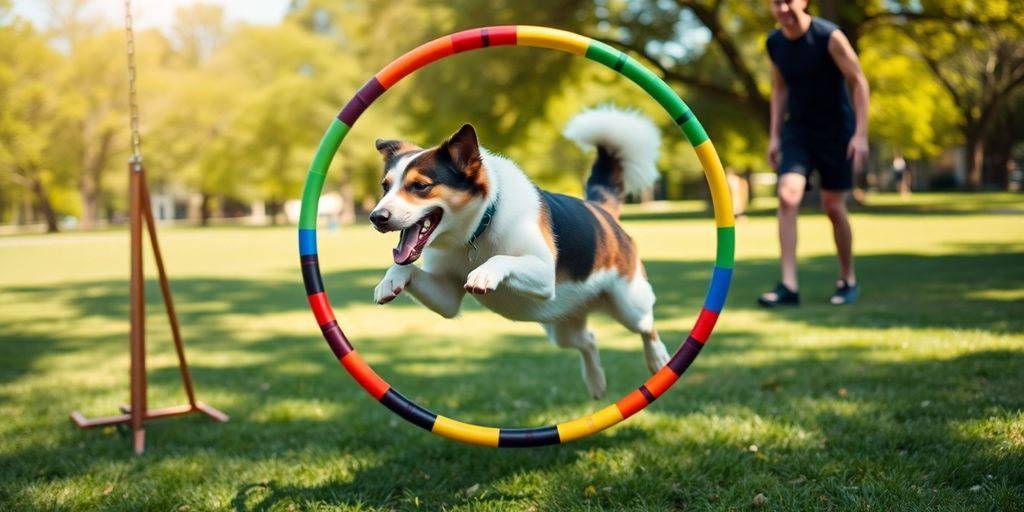
Jumping through a hoop isn’t just about getting your dog to leap; it’s about the timing and precision that make it look effortless. First, you’ll want to start with the basics. Set up a hoop at a low height to ensure your dog feels comfortable and confident. As they approach the hoop, use a consistent verbal cue to signal it’s time to jump. Timing your command perfectly is crucial, as it helps your dog anticipate the leap and execute it smoothly. Practice makes perfect, so be patient and celebrate small successes along the way.
Incorporating Hoops into Agility Courses
Once your dog is comfortable jumping through a single hoop, it’s time to integrate this skill into a larger agility course. Start by placing the hoop in a sequence with other obstacles like tunnels or weave poles. This will challenge your dog’s ability to maintain focus and follow your cues in a more complex environment. Consider these steps:
- Begin with a simple course layout and gradually increase complexity.
- Use directional cues to guide your dog from one obstacle to the next.
- Reward your dog with treats or praise after successfully completing the course.
Remember, the goal is to create a seamless flow between the hoop and other obstacles, enhancing your dog’s agility and control.
Troubleshooting Common Jumping Issues
Even the best-trained dogs can face challenges when learning to jump through hoops. If your dog hesitates or refuses to jump, it might be due to fear or confusion. Here’s how to address some common issues:
- Fear of the Hoop: Gradually introduce the hoop by letting your dog explore it without jumping. Use treats to create positive associations.
- Timing Errors: Ensure your cues are consistent and well-timed. Practice with your dog on a leash initially to guide them.
- Lack of Motivation: Keep training sessions short and fun. Use high-value treats or toys to maintain your dog’s interest.
"Jumping through a hoop is an engaging exercise that helps dogs improve their body awareness and timing, enhancing their agility and control." Learn more about this engaging exercise.
Mastering these advanced techniques will not only improve your dog’s agility skills but also strengthen the bond between you and your furry friend. With patience and practice, your dog will be jumping through hoops like a pro in no time!
Enhancing Performance with Agility Handling Skills
Understanding the Handler’s Role
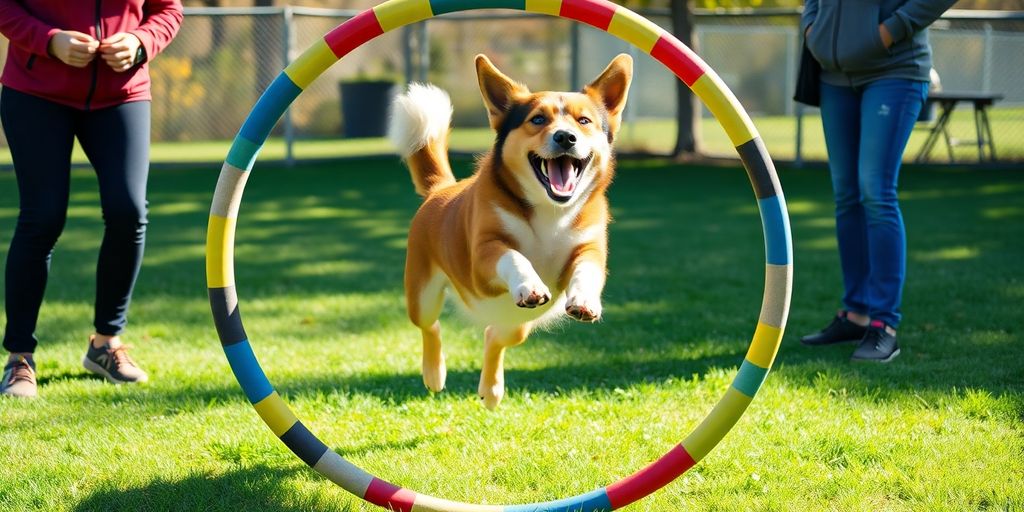
When you’re out there on the agility course with your dog, you’re not just a bystander—you’re their guide. Your movements, your voice, and even your energy levels all play a part in how your dog navigates the course. Think of yourself as a conductor in an orchestra, where your dog is the star musician. Your role is to provide clear, consistent signals that help your dog understand what comes next. It’s about building a language that both you and your dog understand, which requires practice and patience.
Practicing Serpentine and Reverse Spins
These techniques might sound a bit fancy, but they’re all about helping your dog move smoothly and efficiently through the course. The serpentine involves directing your dog through a series of obstacles in a zigzag pattern. It’s a great way to test your dog’s responsiveness and your ability to guide them. On the other hand, the reverse spin is about changing direction swiftly, which can be a game-changer in tight spots. Practice these moves regularly, and you’ll see your dog’s agility skills improve.
Improving Speed and Accuracy
Speed is thrilling, but in agility, accuracy is just as important. To boost both, focus on short, intense training sessions that emphasize precision. Set up a mini-course and time your runs, aiming for both quickness and flawless execution. Use treats to reward your dog for completing sections of the course accurately, reinforcing the behavior you want to see. Over time, this will help your dog become both faster and more reliable on the course.
Agility handling is a dance of trust and communication. Your dog looks to you for cues and guidance, and with practice, you both become a seamless team. Celebrate the small victories along the way, because each one brings you closer to mastering the art of agility handling.
If you’re looking for more insights into training a dog, remember it’s a journey filled with small victories and learning moments. Patience and positive reinforcement are your best friends on this path.
Maintaining Motivation and Overcoming Challenges
Keeping Training Sessions Fun and Engaging
Training your dog should never feel like a chore. Keeping it fun is key to maintaining both your and your dog’s enthusiasm. Try mixing up the routine with different activities. Incorporate games like hide and seek or jumping through hoops to keep things lively. Short, varied sessions are more effective than long, repetitive ones. Aim for 10-15 minutes per session, which is enough to hold your dog’s attention without overwhelming them.
Addressing Fear and Anxiety in Dogs
Some dogs might feel anxious or fearful during training. It’s important to recognize these signs early. If your dog seems stressed, take a step back. Use gentle encouragement and avoid pushing them too hard. Sometimes, a simple break or changing the environment can make a big difference. Remember, patience is your best tool. If anxiety persists, consider consulting a professional trainer.
Celebrating Small Wins and Progress
Don’t wait for the big milestones to celebrate. Every small success is a step forward. Whether it’s mastering a new trick or simply showing improvement in behavior, make sure to acknowledge it. Use treats, a favorite toy, or verbal praise to reward your dog. This not only boosts their confidence but also strengthens your bond.
"Training is a journey, not a destination. Cherish every little victory along the way."
By keeping training sessions engaging, addressing any fears, and celebrating small achievements, you’ll create a positive and rewarding training environment for your dog. This approach not only helps in overcoming challenges but also ensures that both you and your furry friend enjoy the process.
Staying motivated while training your dog can be tough, especially when you face challenges. Remember, every small step counts! Celebrate your progress, no matter how minor it seems. If you ever feel stuck, don’t hesitate to reach out for help. For more tips and support, visit our website and discover how we can assist you in your dog training journey!
Wrapping It All Up
So, there you have it. Teaching your dog to jump through hoops isn’t just about the tricks; it’s about the journey you both take together. It’s a mix of patience, practice, and a whole lot of treats. Remember, every dog learns at their own pace, and that’s perfectly okay. Celebrate the small victories, and don’t stress over the setbacks. At the end of the day, it’s all about having fun and building that special bond with your furry friend. So grab those hoops, keep those treats handy, and enjoy the ride. Happy training!
Frequently Asked Questions
When should I start agility training with my puppy?
You can start basic training with your puppy as soon as they are around 8 weeks old. However, for agility, it’s best to wait until they’re at least a year old and their bones have fully developed.
What equipment do I need for beginner dog agility?
For starters, you need simple jumps, tunnels, and weave poles. As you progress, you can add more complex equipment like teeter-totters and A-frames.
How can I keep my dog motivated during training?
Use treats, toys, and lots of praise. Keep training sessions short and fun to maintain their interest and enthusiasm.
Is clicker training effective for teaching agility?
Yes, clicker training is a great way to teach agility. It helps your dog understand what behavior you’re rewarding, making learning faster and more enjoyable.
What should I do if my dog seems scared of the equipment?
Start slow and let them explore the equipment at their own pace. Use treats and positive reinforcement to build their confidence.
How often should I practice agility with my dog?
Practice a few times a week, but keep sessions short to prevent fatigue. Consistency is key, but it’s important to ensure your dog is having fun.